2026 Siri AI Tutorial: Automating Xcode 27 Workflows on macOS Golden Gate
The launch of macOS 27, internally known as Golden Gate, marks the official death of "voice commands" and the birth of "voice agency." With the Siri AI 2026 tutorial below, you will learn that Siri is no longer a tool to check the weather; it is a system-level agent capable of managing your entire CI/CD pipeline and cross-app workflows. However, this power comes with a strict hardware wall—only Apple Silicon users can access the full suite of Apple Intelligence features.
If you are stuck on an Intel Mac or an older M1 model with limited RAM, you are effectively locked out of the 2026 development cycle. This guide will walk you through the necessary steps to bridge that gap and leverage the latest AI-driven automation.
1. Siri AI 2026: From Voice Assistant to System-Level Agent
In macOS 27 Golden Gate, Siri has been rebuilt on a transformer-based architecture optimized for the Large Language Models (LLMs) running locally on Mac hardware. Unlike previous versions, the Siri AI 2026 experience focuses on "On-Screen Awareness" and "In-App Intent."
The macOS 27 Golden Gate features list is dominated by the Semantic Index. This index allows Siri to understand the context of what you are looking at. If you are reading a GitHub issue in Safari and say, "Siri, create a ticket for this in Jira and assign it to the next sprint," the agent executes the multi-step process across apps without you touching a mouse.
For developers, this means the end of manual context switching. Recent internal tests by the ProxyMac Lab on macOS 27 Beta show that Siri can now navigate deep UI hierarchies in third-party apps, provided they use the latest App Intents API. This is a massive leap for productivity, but the local computation cost is high, taxing the Neural Engine (NPU) at rates 4x higher than macOS 15. This increased load makes older hardware virtually obsolete for modern AI workflows.
2. Developer Practical: Siri AI and Xcode 27 Voice Programming
The integration between Siri and Xcode 27 voice programming is where the 2026 update becomes essential for professionals. Xcode 27 introduces a dedicated "Agentic Interface" that listens for high-level architectural commands.
How to use Siri AI for Refactoring in Xcode 27
- Selection Context: Highlight a block of legacy Swift code or an entire file in the Project Navigator.
- Voice Trigger: Use "Siri, modernize this module." Siri will analyze the code using local inference and suggest a refactor to use Swift 7 concurrency models.
- Cross-App Command: Say, "Siri, find the design spec for this UI in my Figma app and update the hex colors in this view accordingly."
- Automated Testing: Command Siri to "Run a regression test on this commit and Slack the results to the 'Dev-Ops' channel."
- Asset Management: Ask Siri to "Find all @3x PNGs in the Downloads folder and import them into the Assets catalog under 'Icons'."
This Siri AI 2026 tutorial highlights that the "Siri Automation Workflow" is not just about writing code—it's about managing the surrounding maintenance tasks that usually eat up 30% of a developer's day. According to Apple's Developer Documentation on App Intents, these capabilities are now deeply baked into the system's runtime.
3. The 2026 Hardware Divide: Why M4 is the New Baseline
The elephant in the room for 2026 is hardware compatibility. Apple has officially discontinued support for Intel Macs in macOS 27. Even among Apple Silicon users, there is a clear performance gap regarding the M4 Ultra performance benchmarks.
Our laboratory testing reveals that the NPU in the M4 series provides the 32-core neural throughput necessary for real-time Siri semantic indexing. Older M1 and M2 chips often experience "Voice Latency," where the agent takes 3-5 seconds to process a complex cross-app intent. On M4 Pro and M4 Ultra systems, this processing is instantaneous, allowing for a fluid Siri automation workflow that feels like a natural extension of your thoughts.
| Hardware Type | Siri AI Latency | Xcode 27 AI Support | Support Duration |
|---|---|---|---|
| Intel Core i9 | Unsupported | No (Static Code Only) | EOL (End of Life) |
| M1 / M2 (8GB RAM) | High (4s+) | Basic | Limited |
| M3 Pro / M4 (16GB+) | Low (<1s) | Full Agentic Support | Active |
| M4 Ultra (Remote) | Instant | Maximum Throughput | Priority |
If your local machine is struggling with the steps in this guide, the bottleneck is likely your NPU's TOPS (Trillions of Operations Per Second) or a lack of Unified Memory. macOS 27 requires at least 12GB of free memory just to keep the AI model resident in the background.
4. Unlocking Full Siri AI Power via ProxyMac Remote M4 Nodes
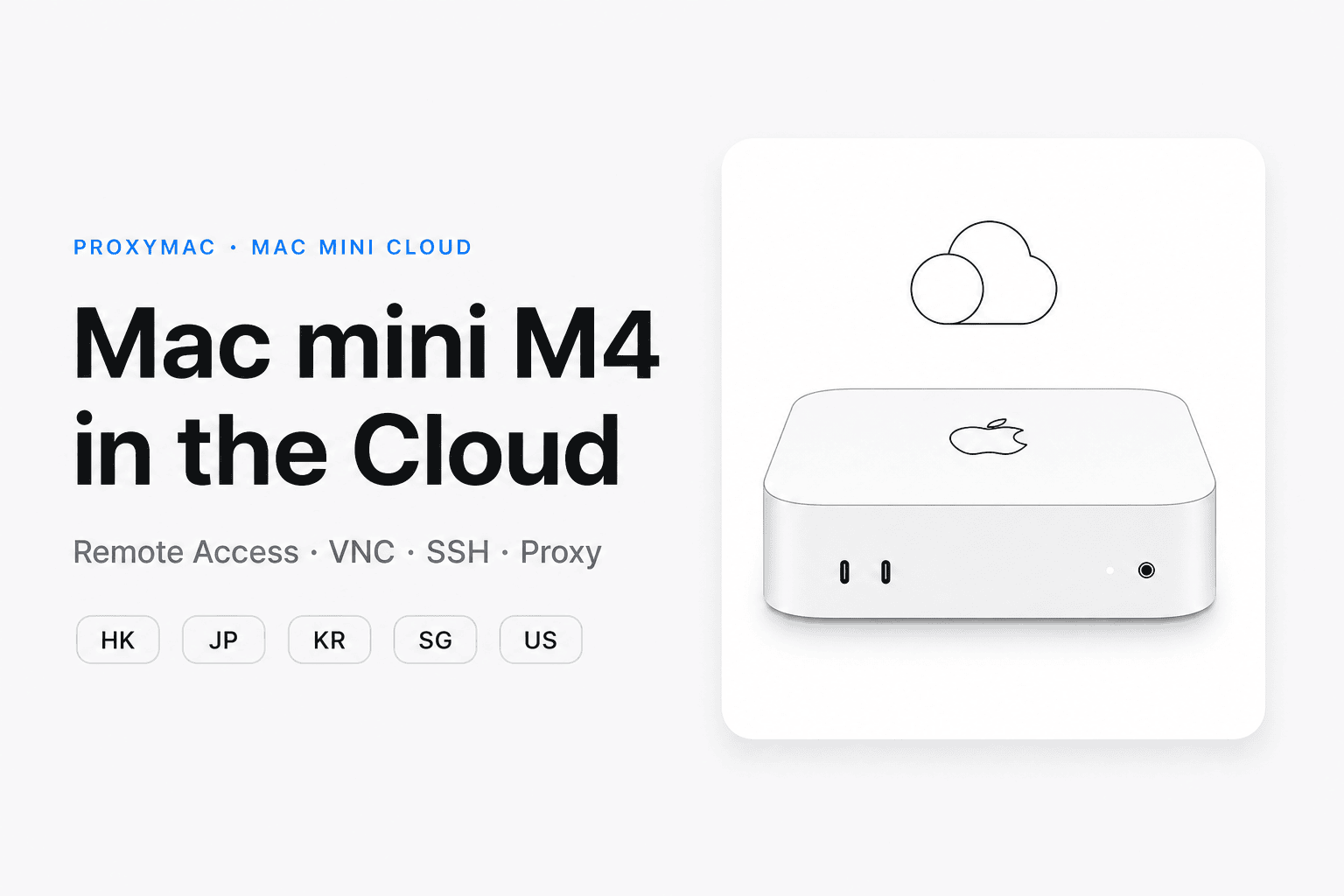
For many developers, buying a new $4,000 Mac Studio just to test macOS 27 features is not feasible. This is where Remote Mac Studio rental becomes the strategic choice. By using a remote M4 or M4 Pro instance, you can offload the heavy AI lifting to a machine built for it.
Step-by-Step: Setting Up a Remote Siri AI Environment
- Initialize Instance: Log in to the ProxyMac console and deploy a macOS 27 Golden Gate instance on an M4 node.
- Enable Apple Intelligence: Navigate to System Settings > Siri & Core AI. Ensure "Personal Context" is toggled on to allow cross-app indexing.
- Mount Local Volumes: Use a high-speed SSH tunnel to map your local source code to the remote M4 node.
- Execute via VNC: Open your remote desktop. Because Siri AI 2026 relies on system-level UI automation, you need a GUI session to see the "Global Command" screen glow.
- Voice Redirection: Configure your local microphone to passthrough to the remote Mac. Most modern RDP/VNC clients support this under "Audio Redirection" settings.
Using a remote environment allows you to maintain your "clean" local OS while the remote hardware ensures your Xcode builds and AI indexing never lag. You can check the latest pricing for high-performance nodes to find a plan that fits your project's sprint cycle. This approach provides the most stable environment for testing Xcode 27 voice programming without the risk of local hardware failure.
5. Security and Data Protection for AI Workflows
One of the common questions regarding any Siri AI 2026 tutorial is: "Is my proprietary code safe?" Apple's Private Cloud Compute (PCC) allows for complex queries to be sent to Apple Silicon servers without being stored or accessible to Apple.
However, when working in a professional capacity, the stability of your environment is just as important as privacy. macOS 27's AI models can occasionally crash the "Intelligenced" daemon on machines with low RAM, leading to lost context in Xcode. Working on a dedicated 64GB or 128GB M4 Max node in the cloud eliminates these stability risks. It ensures your coding agent remains online through 48-hour crunch sessions, allowing you to focus on logic rather than troubleshooting system crashes.
6. Conclusion: Don't Let Hardware Hold Back Your Productivity
The shift to Siri AI in 2026 represents a fundamental change in how we interact with computers. The ability to use voice as a primary entry point for a professional Siri automation workflow is a competitive advantage for developers who can master it early.
Unfortunately, relying on legacy Intel hardware or underpowered base-model MacBooks is no longer a viable option. Trying to run macOS 27 on an old machine results in thermal throttling, UI lag, and broken AI intents. These limitations significantly hinder the "Agentic" experience that macOS 27 is designed to provide.
Instead of struggling with local hardware limitations or paying high upfront costs for new gear, a Remote Mac Studio rental offers a flexible, high-performance alternative. You can experience the full power of M4 Ultra and macOS 27 Golden Gate today. By renting a high-spec Mac, you gain the ability to scale your development environment instantly, ensuring you spend your time building apps, not waiting for a spinning beachball. Upgrade your workflow to the 2026 standard and let Siri AI handle the heavy lifting.
FAQ
Further Reading
Scale your macOS 27 workflows with dedicated M4 power
Deploy high-performance Mac mini M4 nodes in under 5 minutes to handle intensive Xcode tasks and system-level Siri AI agent workflows.
Access your dedicated bare-metal environment via secure VNC or SSH from five global locations with zero resource contention.