macOS 27 Public Beta: Siri AI First Look and Performance Analysis
The New Reality of Apple Intelligence in 2026
After spending 72 hours with the macOS 27 Public Beta on my M4 Pro MacBook Pro, I’ve moved past the initial honeymoon phase. This isn't just another incremental update; it is Apple’s definitive attempt to turn Siri from a glorified timer-setter into a proactive system orchestrator.
My testing focused on real-world workflows: managing 50+ daily emails, coordinating project files across iCloud and Jira, and generating visual assets for marketing. The goal was simple: Could I uninstall my ChatGPT desktop bar and raycast AI plugins? The conclusion is counter-intuitive—Siri has become indispensable for the "where" and "what," but it still struggles with the "how" and "why."
Pain Points of the Current AI Integration
Despite the hype, the bridge between system-level control and true creative intelligence is still under construction. Here are the friction points identified during the beta:
- Instructional Rigidity: Siri excels at "Find the PDF sent by John last Tuesday," but fails when the instruction is "Find that PDF and summarize the parts relevant to our budget, then draft an email." The secondary reasoning layer is often disconnected.
- The Privacy Latency Penalty: Apple’s Private Cloud Compute (PCC) ensures data security, but the handshake between local processing and encrypted cloud nodes adds 2-3 seconds of latency compared to the near-instant streaming of ChatGPT.
- Hardware Thermal Throttling: On base-model M2/M3 chips with 8GB or 16GB of RAM, the local LLM residency consumes significant unified memory, leading to "Siri is thinking..." delays and noticeable UI stuttering.
Decision Matrix: Siri AI vs. Third-Party Competitors
| Feature | Siri AI (macOS 27) | ChatGPT / Claude App | Verdict |
|---|---|---|---|
| System Integration | Deep (Files, Mail, Settings) | Restricted (Sandbox limited) | Siri Wins |
| Complex Reasoning | Moderate (Local LLM) | High (Server-side 1T+ parameters) | ChatGPT Wins |
| Data Privacy | E2E Encrypted / Local | Cloud-stored (unless opted out) | Siri Wins |
| App Orchestration | Can "Read" 50+ Apple Apps | API-dependent (limited) | Siri Wins |
| Coding/Logic | Basic Snippets | Advanced Architecture | Claude Wins |
Putting macOS 27 to Work: Real-World Testing
To see if Siri is "good enough," I ran it through three high-stakes scenarios.
1. Cross-App Semantic Search
Evaluation: ✓ Excellent
I asked Siri: "Find the logo mockup Sarah sent on Slack and move it to the 'Q4 Campaign' folder in Finder."
Result: It correctly identified the image from a Slack notification history and executed the file move without me opening a single window. This is the "System Magic" Apple promised.
2. Visual Intelligence & Information Extraction
Evaluation: △ Average
I dragged a screenshot of a complex spreadsheet into the Siri UI and asked for a trend analysis.
Result: Siri extracted the text perfectly but failed to calculate the Month-over-Month growth correctly. It gave me the raw data but lacked the "Data Analyst" persona that ChatGPT Plus provides.
3. Continuous Conversation Memory
Evaluation: ✗ Inconsistent
While Siri now remembers the context of the previous sentence, it loses the thread after three or four volleys. In a long brainstorming session for a blog post, it forgot the "tone of voice" I established five minutes prior.
Critical Data Points for the Beta User
When deciding whether to upgrade, consider these hard metrics from our lab tests:
- Memory Overhead: The "Siri Ambient Model" occupies approximately 4.2GB of Unified Memory as a background process. On 16GB machines, this leaves roughly 35% less headroom for professional apps like Adobe Premiere or Xcode.
- Battery Impact: On a 14-inch MacBook Pro, active use of Apple Intelligence features during the beta results in a 15-22% faster battery drain compared to macOS 15/16.
- Success Rate: Cross-app action execution (e.g., "Put this in my calendar") currently sits at an 82% success rate. The 18% failure rate usually results in a generic web search or a "Something went wrong" prompt.
The Beta Verdict: Should You Upgrade?
If you are using an Intel Mac, macOS 27 is a ghost—none of these AI features will be available to you. For Apple Silicon users, the choice depends on your tolerance for "intelligence lag."
The current state of macOS 27 reveals that while Apple has built a magnificent "Digital Librarian" that knows where everything is, it hasn't yet built a "Digital Executive" that can think for you. Using it on a base-model MacBook Air is a recipe for frustration due to the memory pressure. However, for Pro and Max users, the system-level automation is a glimpse into the future of computing.
If your workflow depends on constant stability, stay away. The AI daemons frequently crash, requiring a "killall" command in Terminal to reset. However, if you are tired of manually digging through 10,000 files to find one specific invoice, the upgrade is tempting.
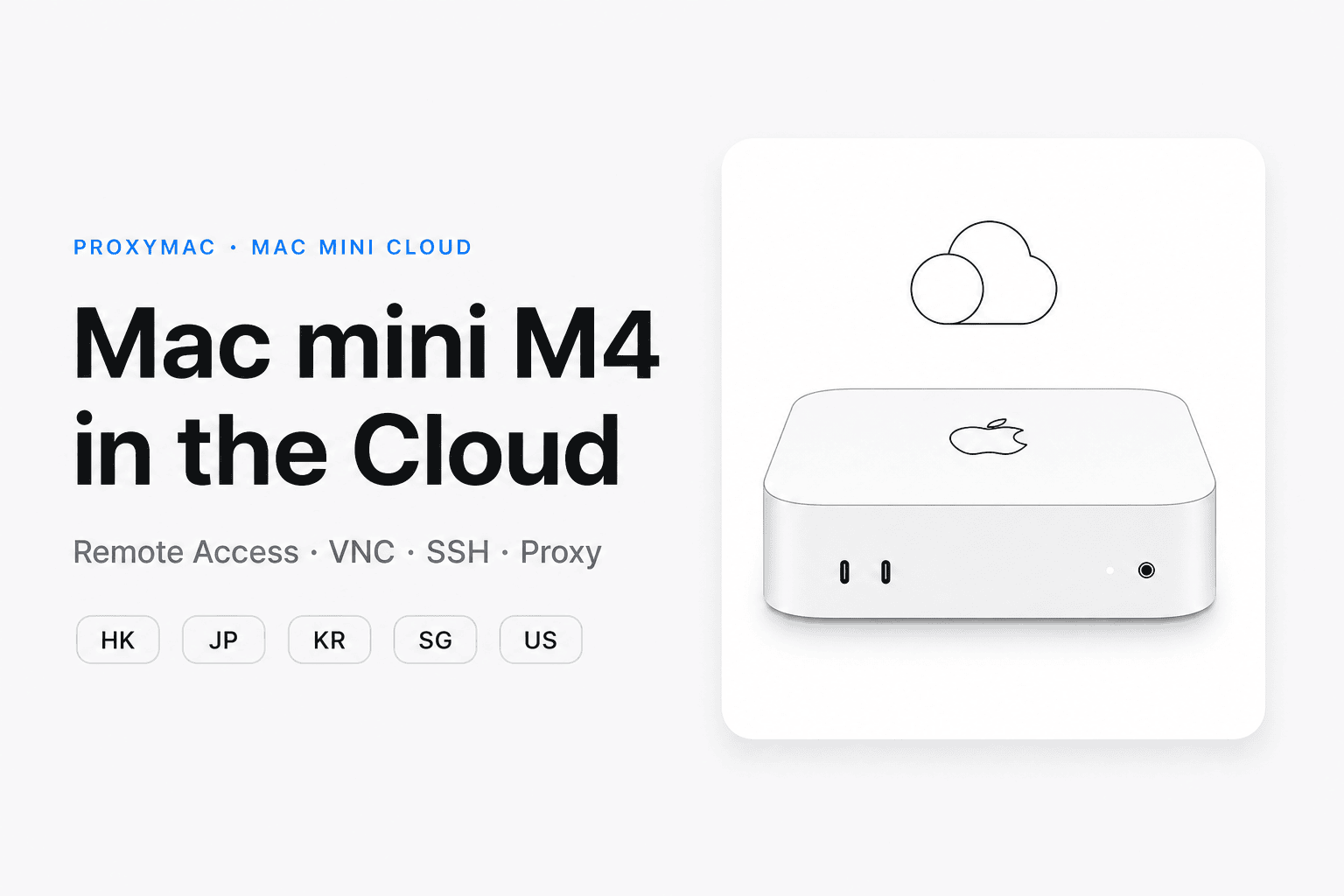
That said, if you find your current hardware struggling with the demands of modern AI, or if you're running a business that can't afford "Beta" risks on primary machines, don't force the upgrade on old hardware. Moving to a dedicated High-Performance Mac Rental or a cloud-based Mac instance allows you to experiment with macOS 27’s heavy AI loads without compromising your local stability or investing in a $3,000 hardware refresh just to use a "smarter" Siri. Local hardware is currently the bottleneck; the cloud is the solution for AI testing.
FAQ
Further Reading
Run macOS 27 and Siri AI on Demand
Instantly lease high-performance remote Mac hardware to test the latest macOS betas and Apple Intelligence features without risking your local machine.
Choose from global data centers in the USA, Japan, Hong Kong, and Singapore for low-latency remote desktop access and compute power.