2026 macOS 27 New Features: Productivity Leap or Just Visual Hype?
When was the last time an operating system update actually changed how you worked? For years, macOS updates felt like a collection of new wallpapers and slight tweaks to the Control Center. However, with the release of macOS 27, the narrative shifts from "incremental changes" to "system-wide intelligence."
The core promise of macOS 27 is the transition of your Mac from a passive tool into a proactive assistant. But with increased hardware demands and a heavy reliance on Apple Intelligence, is this the year to click "Upgrade Now," or should you wait for the bugs to settle? In this guide, we break down the high-value features, the hidden costs, and the cold reality of running AI on older hardware.
The Pain Points of Older macOS Versions
Before we look at the new features, we must acknowledge why users are feeling the urge to upgrade. Traditional macOS workflows have hit several walls:
- Siloed Applications: Moving data between Mail, Slack, and Excel still requires manual dragging, dropping, or copy-pasting. Siri was previously incapable of understanding the context of what you were looking at across these apps.
- Information Overload: Researching in Safari often results in 50+ open tabs, leading to "tab paralysis" where finding a specific source takes longer than reading it.
- The "Blank Page" Anxiety: Professional communication often stalls at the drafting stage, where users struggle with tone and concise summarization in a fast-paced corporate environment.
- Hardware Inefficiency: Many users find that current AI tools (like ChatGPT or local LLMs) drain battery life and trigger fans because they aren't optimized for the macOS kernel.
macOS 27 Decision Matrix: Feature Value vs. Necessity
Which features are game-changers, and which are just "nice to have"? The following table categorizes the core updates for macOS 27.
| Feature Area | Key Function | Impact on Workflow | Our Recommendation |
|---|---|---|---|
| Siri 2.0 | Cross-app execution & Screen Awareness | High: Saves minutes of manual navigation per task. | Must-Have |
| Safari 27 | AI Tab Grouping & "Notify Me" Alerts | Medium: Cleans up research but requires adaptation. | Worth Trying |
| Writing Tools | Real-time professional tone adjustment | High: Essential for non-native speakers & corporate roles. | Must-Have |
| Liquid Glass | New transparent UI & dynamic depth | Low: Purely aesthetic; zero impact on speed. | Visual Gimmick |
| Visual Intelligence | Image-based search and action via Siri | Medium: Great for students and designers. | Niche Use |
Step-by-Step: Maximizing Your Productivity Post-Upgrade
If you decide to make the jump to macOS 27, follow these steps to ensure the new AI-driven features are actually working for you rather than distracting you.
- Initialize the Siri Knowledge Base: Upon first boot, go to System Settings > Siri & Search. Enable "On-Screen Awareness." This allows Siri to understand context, such as a PDF you are currently reading or a photo you just received.
- Configure Safari "Notify Me": Open Safari 27, navigate to a page you are monitoring (like a flight tracker or a stock page). Click the AI icon in the address bar and select "Notify Me." The system will now notify you only when specific, relevant changes occur on that page.
- Set Up Private Cloud Compute (PCC): Review your privacy logs in the Privacy & Security tab. macOS 27 uses PCC to handle complex logic while keeping your data encrypted and inaccessible to Apple.
- Audit Your Tab Groups: Use the "Auto-Sort" feature in Safari. Right-click any tab and select "Arrange Tabs by Topic." It will automatically group work, travel, and shopping tabs into separate folders.
- Refine Writing Templates: Highlight any text in Mail or Pages and use
Cmd + I(the new shortcut). Set your default "Writing Style" to Professional or Concise to speed up your daily correspondence.
Hard Data: The Hidden Cost of "Smart" Features
Upgrading software is free, but the hardware cost of running macOS 27 smoothly is real. Here are the technical benchmarks you need to keep in mind:
- Memory Overhead: Apple Intelligence in macOS 27 requires a baseline of 4.5GB of Unified Memory just to maintain the local model's "ready" state. Projects on 8GB Macs will likely experience "swap memory" lag during multitasking.
- Siri Execution Speed: On M3 chips, cross-app Siri commands (e.g., "Send the receipt from my Downloads to my accountant in Mail") process in under 1.2 seconds. On M1 chips, this can take up to 4 seconds due to lower NPU (Neural Engine) throughput.
- Battery Impact: Using Safari’s AI summarization and Notify Me tracking consistently can reduce MacBook Air battery life by approximately 12-15% compared to the "Static" browsing mode available in earlier versions.
Why "Wait and See" Might Be the Wrong Move
Many professionals hesitate to upgrade, fearing system instability. However, the alternative—sticking with older versions—leaves you with an AI gap. Windows Copilot+ PCs are already integrating deep system-level automation; if you choose to remain on macOS 14 or 15, you are essentially manually operating a machine that was designed to be autonomous.
The "traditional" way of using a Mac—manually managing files, searching through emails for dates, and organizing tabs—is becoming a legacy workflow. If you are an office professional or a student, the efficiency gains from the new Siri and Safari 27 outweigh the minor risks of a version-one release.
While you can manage these tasks on a local machine, the truth is that your current MacBook hardware might struggle to maintain peak performance under the heavy weight of macOS 27’s native AI. If your current Mac is pre-M2 or has limited RAM, you will notice thermal throttling and stuttering. In these cases, it is often more efficient and cost-effective to explore high-performance Mac rental solutions. By leveraging a high-spec Mac remotely, you get the full power of macOS 27 without the $2,000+ entry price for a new M3/M4 Max workstation. Experience the future of macOS now, without the hardware commitment.
FAQ
Further Reading
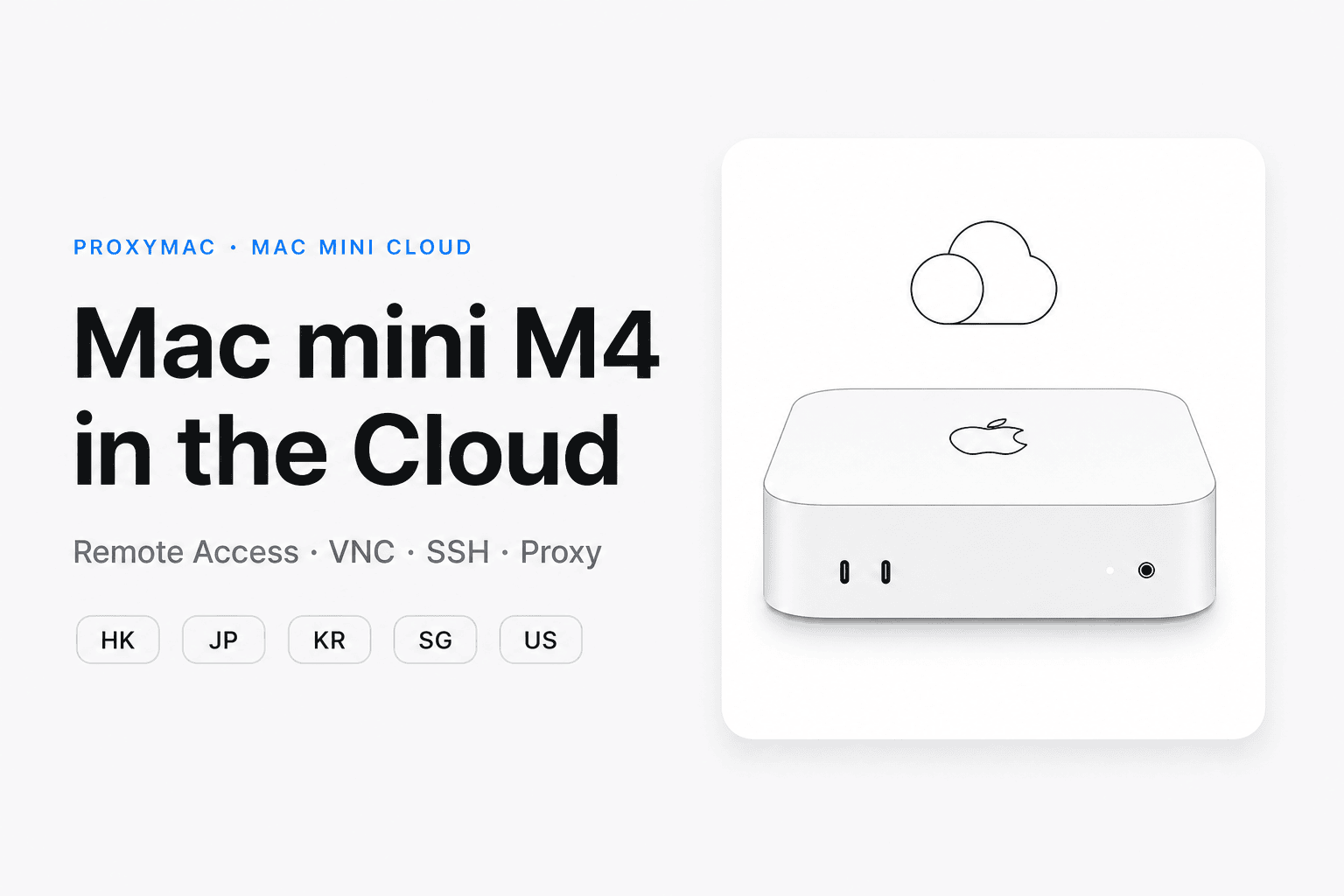
Ready to Test macOS 27? Deploy Your M4 Mac in Minutes
Experience the full power of macOS 27 and Siri AI on dedicated bare-metal Mac mini M4 nodes with zero resource contention.
Eliminate hardware bottlenecks with 10-core M4 performance and high-speed NVMe storage, perfect for intensive AI workloads.