2026 AI Trends: Meta Enters Bare-Metal Leasing While Mac Mini Dominates Edge Computing
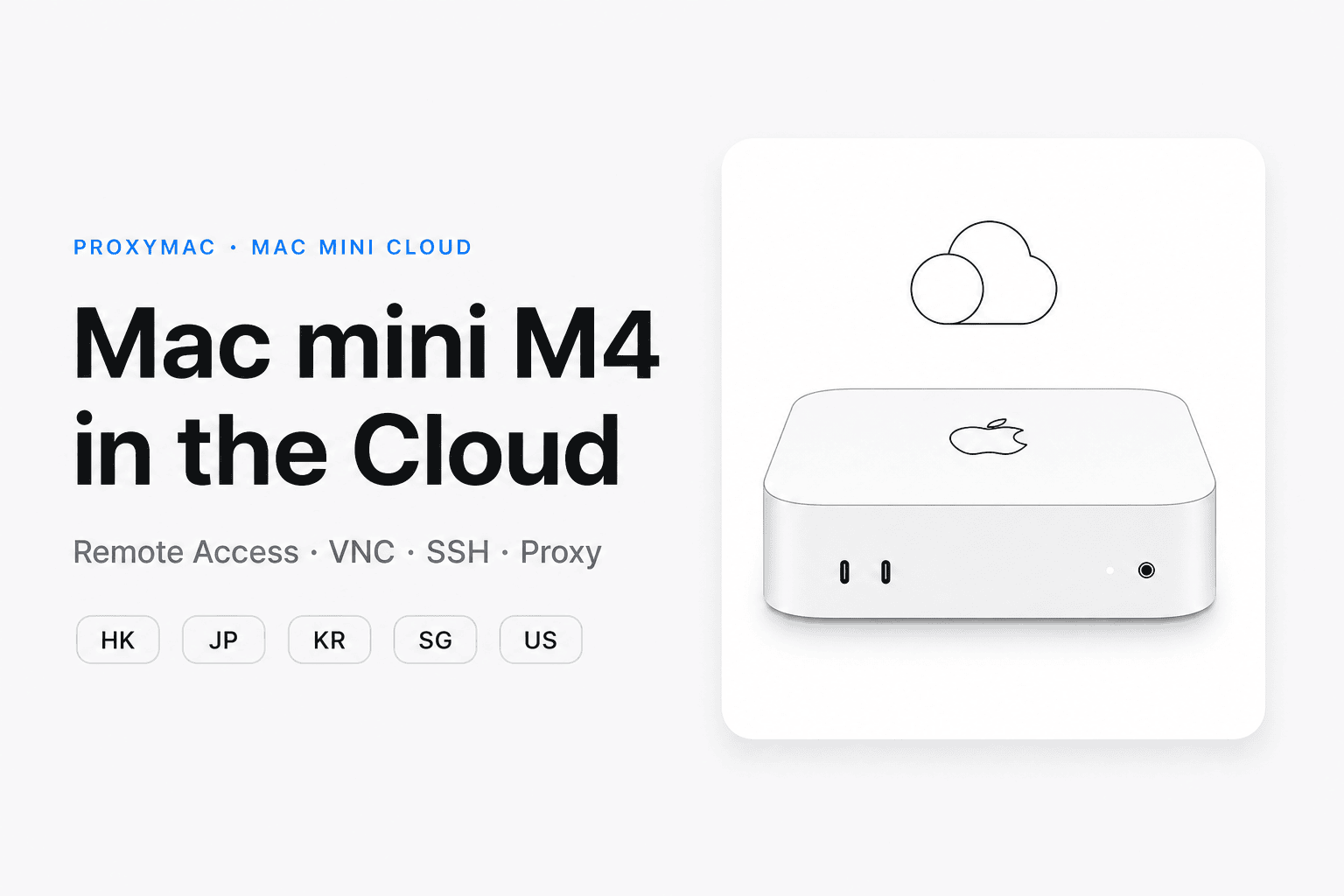
The AI landscape of 2026 has officially entered its "Industrial Revolution" phase. While tech giants are spending hundreds of billions to build digital cathedrals, the average developer is faced with a critical choice: do you rent a seat in their cloud, or do you build your own fortress at home? On July 1, 2026, Bloomberg reported that Meta is pivoting to become a "Bare-metal" giant, yet at the same time, the Mac mini is proving that "small compute" might be the ultimate winner for individual creators.
Meta Compute: The Nightmare for Neocloud Providers
According to reports from Bloomberg, Meta is internalizing its "Meta Compute" cloud business, a move that sent Meta’s pre-market stock soaring by 8% to 10%. With an AI capital expenditure projected between $125 billion and $145 billion for 2026, Mark Zuckerberg’s strategy is clear: if you have excess power, you sell it.
Meta Compute is attacking the market from two fronts. First, a Model-as-a-Service (MaaS) layer offering access to proprietary models like Muse Spark. Second, and more disruptively, a Bare-metal infrastructure service. This directly targets "neocloud" players like CoreWeave by offering raw hardware access at a scale few can match. For the "Big Tech" tier, compute has become the new oil—and Meta just opened the biggest refinery on the planet.
The Pain Points of Hyper-Centralized AI
While Meta’s move makes compute "accessible," it highlights three growing frustrations for independent developers and small labs:
- The "Tax" of Connectivity: Relying on bare-metal leasing means every token generated incurs a latency cost and a bandwidth fee. For real-time edge applications, the round-trip to a Meta data center is a dealbreaker.
- Privacy Cascades: Sending proprietary data to a third-party bare-metal server, regardless of encryption claims, creates a compliance "black box" that many startups are beginning to fear.
- Cost Volatility: As seen with early GPU shortages, leasing prices are subject to market whims. What is affordable today for a "Muse Spark" API call might triple tomorrow if Meta decides to prioritize its own internal training runs.
Decision Matrix: Bare-Metal Cloud vs. Local Mac Mini
If you are deciding where to deploy your next AI automation or private LLM, here is how the 2026 options stack up:
| Feature | Meta Bare-Metal (Cloud) | Mac Mini M4/M4 Pro (Edge) |
|---|---|---|
| Ideal For | Massive Model Training / Fine-tuning | Inference / Home Lab / Daily Automation |
| Cost Model | Recurring OpEx (Hourly) | One-time CapEx (Hardware Purchase) |
| Latency | 50ms - 200ms+ | < 5ms (Localhost) |
| Data Privacy | Shared Infrastructure | 100% Local / Air-gapped capable |
| Complexity | High (Requires DevOps/SSH) | Low (Plug & Play / macOS ecosystem) |
| Scalability | Near-infinite | Limited by Physical RAM |
Setting Up Your Local Compute Hub with Mac Mini
For those choosing the "Edge Computing" route, the Mac mini M4 has become the gold standard for personal AI. Here is the 5-step blueprint to achieving compute sovereignty:
- Hardware Selection: Opt for at least 32GB of Unified Memory. AI workloads on Apple Silicon thrive on memory bandwidth; the M4 Pro’s 273GB/s is a game-changer for 30B parameter models.
- Environment Configuration: Use
OllamaorLM Studioto manage local model weights. These tools leverage the Metal Acceleration framework natively. - Local Automation via MCP: Implement the Model Context Protocol (MCP) to allow your local LLM to interact with your local files, NAS, and HomeKit devices without ever hitting the internet.
- Containerization: Use Docker Desktop or OrbStack to run self-hosted databases (like Vector DBs for RAG) alongside your AI models.
- Remote Access: Set up a secure tunnel (like Tailscale) so you can "borrow" the compute of your home Mac mini from your iPhone or MacBook while traveling.
The Raw Data of 2026 Compute Economics
To understand why "going local" is gaining traction, consider these hard figures:
- The Meta Scale: Meta’s $145B CAPEX is enough to buy roughly 3 million H100 GPUs, yet they still face "weekly" requests from external firms willing to pay a premium for compute.
- The Mac Mini Efficiency: A Mac mini M4 Pro consumes roughly 15W–30W during standard AI inference, whereas a single H100 node in a bare-metal rack can exceed 700W per GPU, not including cooling.
- The Latency Gap: For a "Smart Home Personal Assistant," cloud-based inference takes approx. 1.2 seconds for a voice-to-action cycle. Locally, a Mac mini M4 reduces this to under 200ms, making the interaction feel "human."
Why Your "Water Tank" Matters in an Era of "Tap Water"
Zuckerberg’s move to turn compute into a utility—like tap water—is a massive win for the industry. However, relying solely on "Cloud Tap Water" makes you vulnerable to price hikes and outages. Owning a Mac mini is like having a private "Water Tank." It may not have the volume of the city reservoir, but it ensures that your most vital systems—your private data, your home automation, and your daily AI tools—never run dry.
While rental solutions provide the raw power needed for "heavy industry" AI training, they are overkill for 90% of a developer's daily tasks. Relying on remote bare-metal for basic inference is a recipe for high costs and low privacy. If you want a more responsive, secure, and cost-effective workflow, leasing a high-end Mac or buying a local Apple Silicon node is the superior path for long-term AI development.
FAQ
Further Reading
Secure Your Piece of the Edge with Dedicated Mac Cloud Power
Access high-performance bare-metal Mac infrastructure across global data centers including the USA, Japan, and Hong Kong.
Deploy dedicated Mac mini and Mac Studio nodes instantly with professional-grade remote access for AI and development workloads.